 Mr_Rajkamal
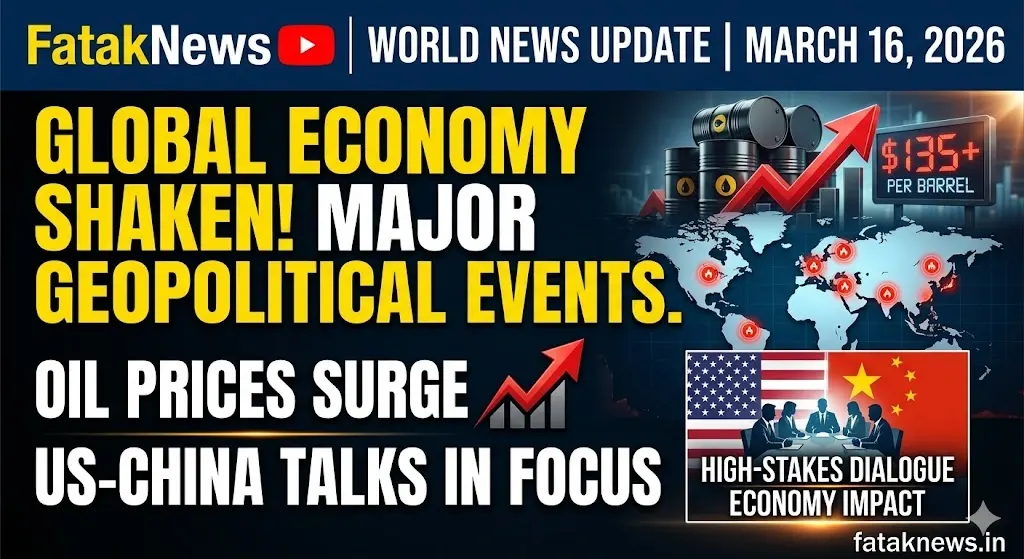
 World News March 16, 2026: Major Geopolitical Events Shake Global Economy
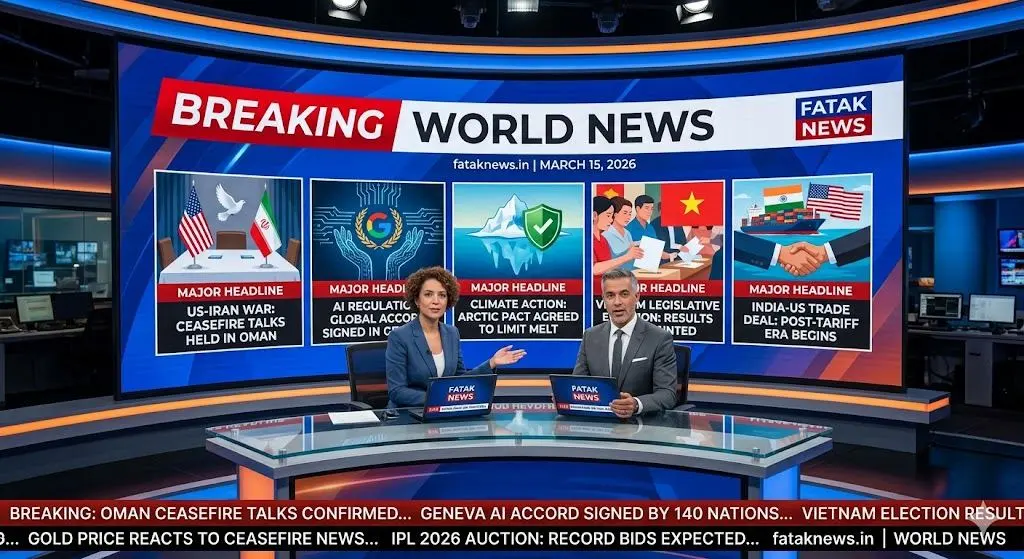
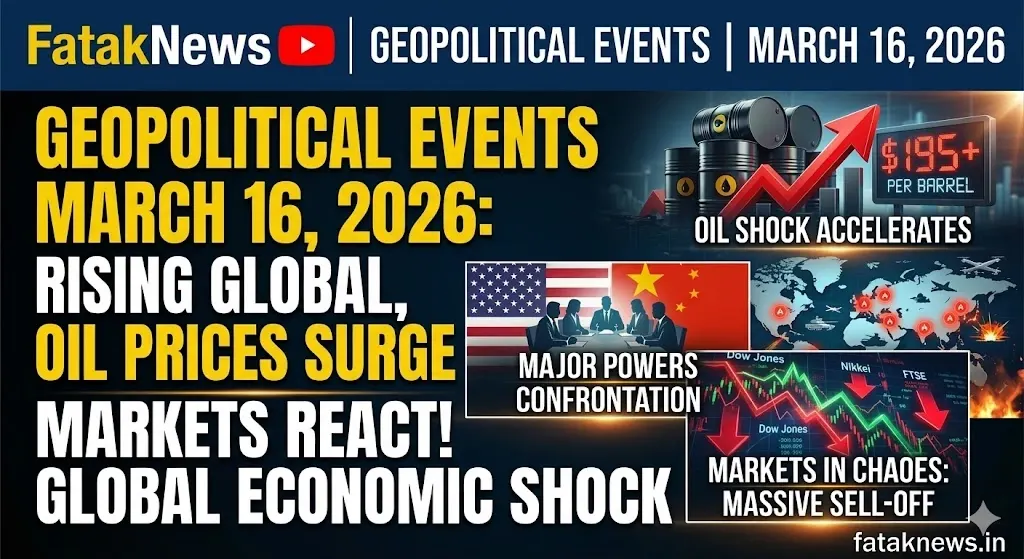
The world entered March 16, 2026, under intense geopolitical pressure as multiple international flashpoints continued to influence energy prices, trade flows, and investor sentiment. From the escalating Middle East conflict to renewed tensions in Europe and high-level US-China economic talks, global markets are reacting to a fast-changing international landscape.
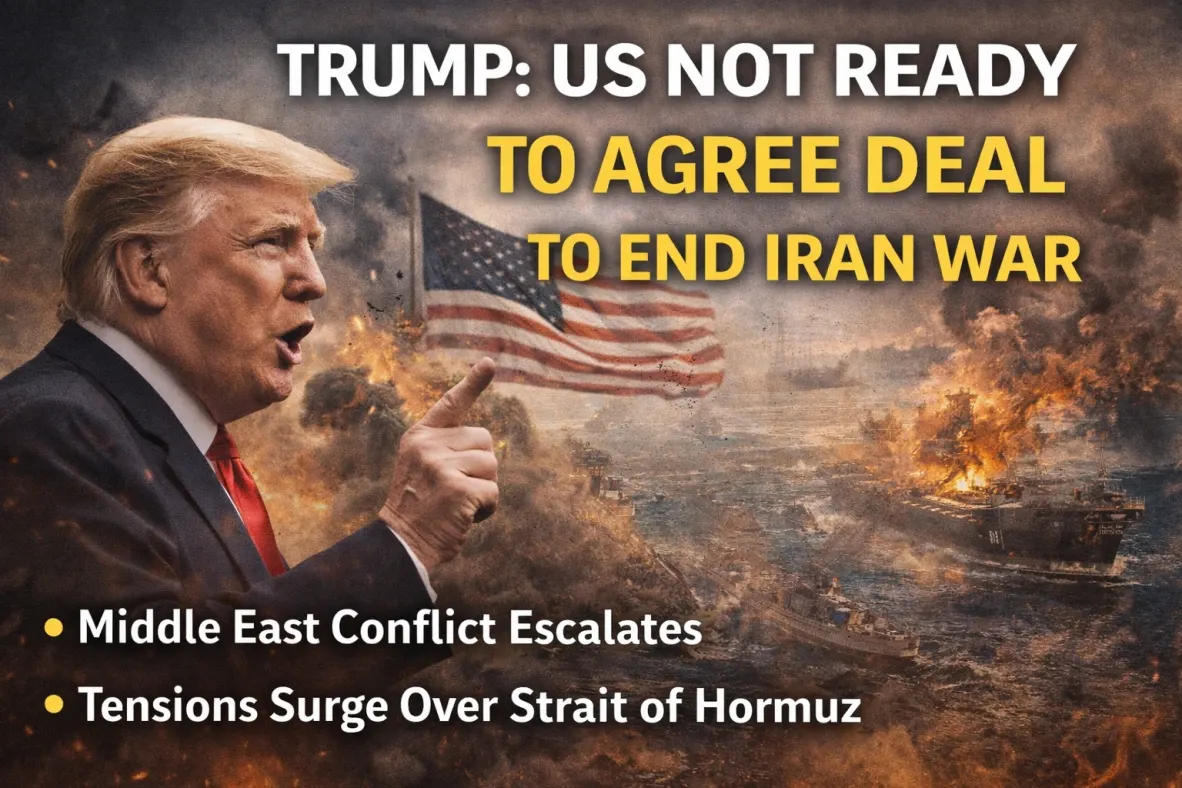
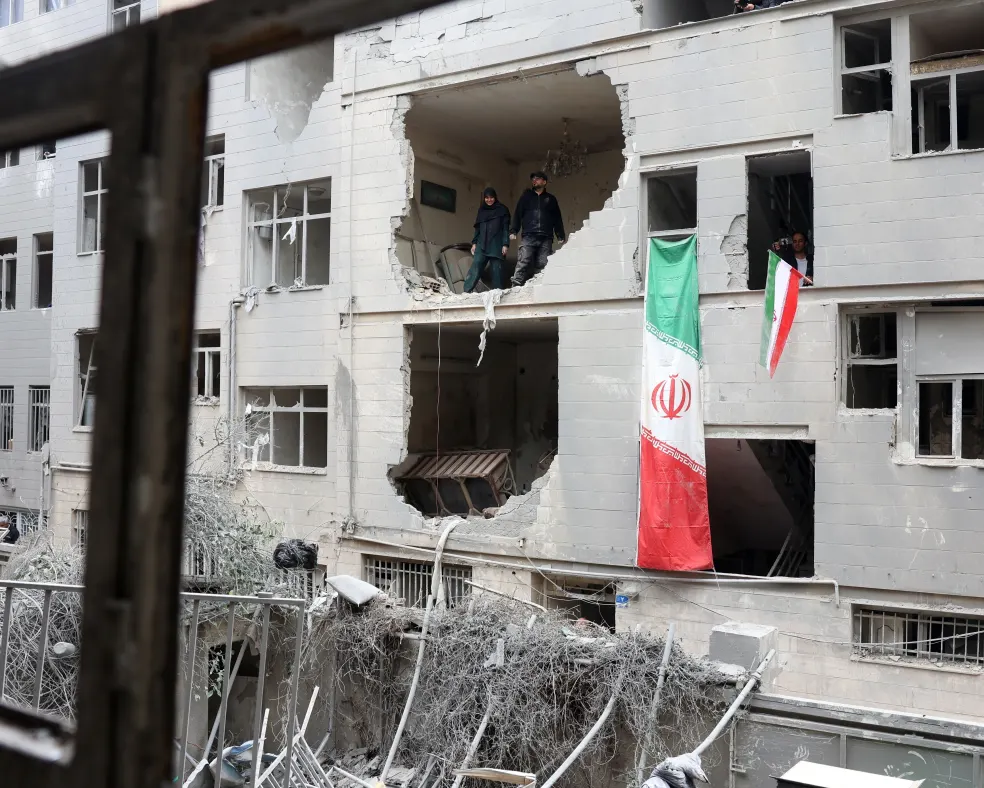
The biggest concern for the global economy remains the ongoing Middle East crisis. Disruption around key oil shipping routes has increased fears of a prolonged energy shock. Rising crude prices are again putting pressure on inflation, transport costs, and industrial supply chains across Asia, Europe, and North America.
Middle East Conflict Continues to Drive Global Oil Anxiety
The geopolitical spotlight remains fixed on the Middle East, where the conflict involving Iran has triggered serious fears over global energy security. Market participants are closely watching developments around the Strait of Hormuz, one of the world’s most critical oil transit chokepoints.
With global oil supply concerns intensifying, policymakers and investors are worried that prolonged instability could lead to higher fuel prices, imported inflation, and slower economic growth. This is particularly significant for oil-importing countries such as India, which remain vulnerable to sudden price spikes in energy markets.
IEA Emergency Oil Release Signals Serious Supply Concerns
In response to the growing supply shock, the International Energy Agency has moved toward releasing emergency stockpiles to calm global markets. This step highlights how seriously governments are treating the latest disruption in energy flows.
The move is expected to offer short-term support to oil markets, but analysts believe that unless regional tensions ease, volatility may remain elevated. Higher oil prices could directly affect transportation, manufacturing, food costs, and overall inflation expectations worldwide.
US-China Economic Talks Gain Global Importance
At the same time, another major geopolitical and economic development is unfolding in Paris, where top US and Chinese officials are holding high-level talks. These discussions are being closely watched because any progress between the world’s two largest economies could influence global trade, supply chains, and investor confidence.
The talks are especially important at a time when the global economy is already under stress from war-related energy disruptions. If the two sides manage to reduce trade friction, that could provide some relief to global markets. However, expectations remain cautious, and any failure to make progress may add fresh uncertainty.
Europe Faces Renewed Pressure Over Ukraine Conflict
Europe is also dealing with renewed strategic pressure as the Russia-Ukraine war continues to affect regional stability. Fresh attacks and the European Union’s continued sanctions posture underline that the conflict remains a major geopolitical risk for the continent.
The prolonged war is not only a military issue but also an economic one. Energy security, defense spending, sanctions, and supply chain realignment continue to shape policy decisions across Europe. These factors are contributing to a fragile economic environment already strained by global inflationary risks.
Why the Global Economy Is on Edge
The combination of war-driven oil volatility, trade uncertainty, and unresolved military conflicts has raised fears of slower growth across major economies. Investors are increasingly concerned that the world may face a difficult mix of inflation pressure and weak economic momentum.
For emerging markets, the challenge is even greater. Countries dependent on imported fuel may see pressure on currencies, trade balances, and consumer prices. Central banks may also find it harder to support growth if inflation rises again.
Impact on India and Other Emerging Economies
For India, these developments matter deeply. A sustained increase in crude oil prices can affect fuel costs, logistics expenses, import bills, and inflation. It may also influence the rupee, equity markets, and policy decisions related to subsidies and interest rates.
Other emerging economies across Asia and Africa may face similar stress if geopolitical disruptions continue through the coming weeks. Investors are therefore expected to remain focused on energy prices, global diplomacy, and the next round of economic signals from major powers.
Conclusion
March 16, 2026, is shaping up to be a critical moment for the world economy as geopolitical tensions continue to dominate headlines. The Middle East conflict, global oil disruption, US-China trade diplomacy, and persistent Ukraine-related instability together form a powerful mix of uncertainty.
Unless diplomatic breakthroughs emerge soon, the world may continue to face heightened volatility in energy, trade, and financial markets. For governments, businesses, and ordinary consumers alike, the coming days could be crucial in determining whether the current geopolitical shock turns into a deeper global economic challenge.
FAQs
- Why is world news on March 16, 2026, focused on geopolitics?
Because major international conflicts and trade tensions are directly affecting oil prices, inflation, and the global economy. - How is the Middle East conflict impacting the global economy?
The conflict is raising fears over oil supply disruption, especially around key shipping routes, which can push fuel prices and inflation higher worldwide. - Why are US-China talks important for global markets?
Because better relations between the US and China could reduce trade uncertainty and support global supply chains and investor confidence. - How could these events affect India?
India may face pressure through higher crude oil prices, rising import costs, inflation risks, and possible currency volatility.
Read more About Geopolitical Ebent global economy
- World News March 15, 2026: Major Geopolitical Events and Global Economy
- Global News Today (March 14, 2026): Iran War Escalates, Oil Prices Surge, World Politics and Economy Face Major Shock
- Top 10 Geopolitical Events Shaping the World in 2026
- Top World News March 15, 2026: Middle East War Escalates, Oil Prices Surge, Global Markets on Edge
- US Strikes Iran’s Kharg Island As Middle East Conflict Intensifies
- India May Face Tough Choices Amid Iran War, US Expert Warns