 Mr_Rajkamal
 Top World News March 17, 2026: Major Geopolitical Events Shaking Global Economy
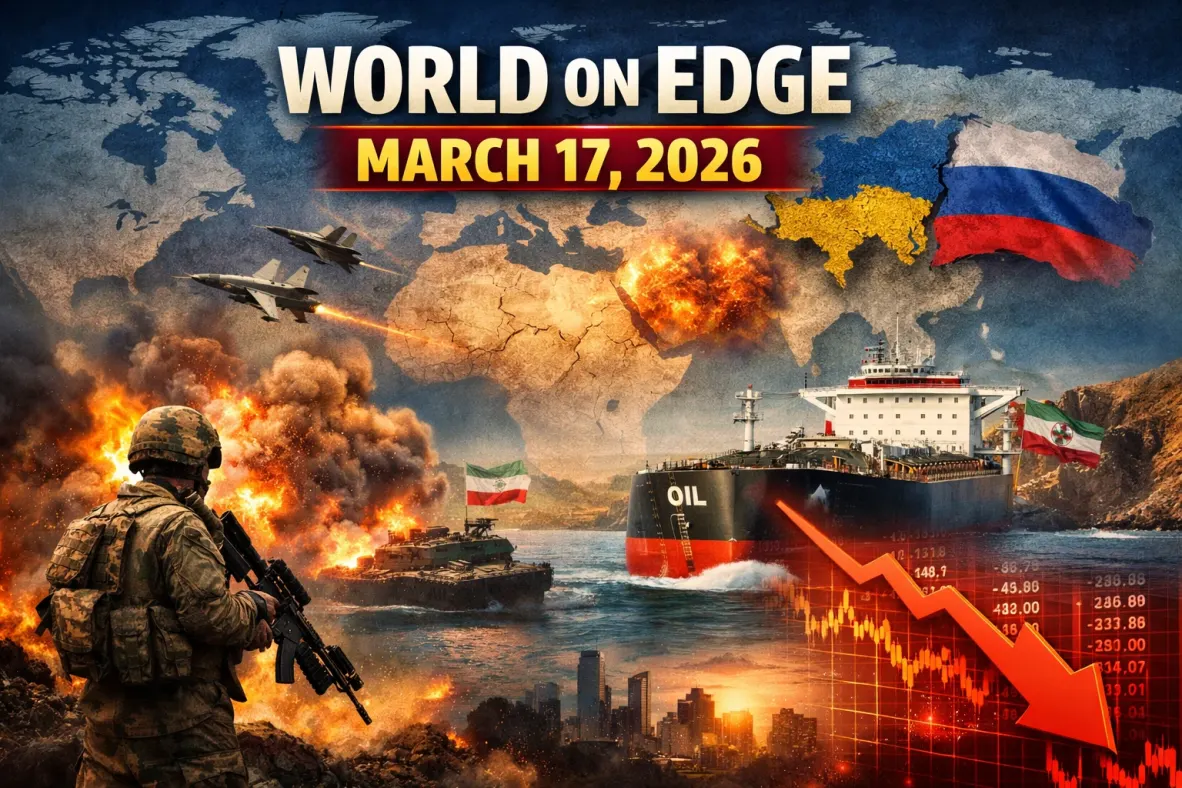
Global Update: Several major geopolitical events on March 17, 2026 are rapidly reshaping global politics, security and the international economy. From the escalating US-Iran conflict and tensions in the Strait of Hormuz to diplomatic disputes across Europe and Asia, the world is witnessing one of the most volatile geopolitical moments in recent years.
These developments are already affecting oil prices, international trade, military alliances and financial markets, raising concerns among world leaders and economic experts.
US–Iran Conflict Raises Global Security Concerns
The ongoing US-Israel-Iran confrontation continues to dominate global headlines. Military strikes and drone attacks across the Middle East have heightened fears of a wider regional war.
The strategic Strait of Hormuz, through which nearly 20% of global oil supply passes, has become a key flashpoint.
Experts warn that any disruption to this vital shipping route could trigger a major global energy crisis and push fuel prices sharply higher worldwide.
Western Allies Divided Over Military Support
The conflict has also exposed divisions among Western allies.
US President Donald Trump recently criticised some NATO allies for refusing to participate in a proposed naval coalition to secure the Strait of Hormuz.
Meanwhile, several European leaders have emphasised that the conflict should not escalate into a broader international war.
Germany has said the Iran war is not a NATO matter, highlighting the growing diplomatic tension within the Western alliance.
Global Oil Markets Under Pressure
The geopolitical instability in the Middle East has already begun affecting global energy markets.
Oil traders are closely monitoring developments in the Gulf region as any disruption to tanker routes could lead to a sudden spike in oil prices.
Economists warn that prolonged instability could increase inflation worldwide and slow economic growth.
Russia-Ukraine War Continues to Impact Global Politics
Meanwhile, the ongoing Russia-Ukraine war continues to influence international relations and global security.
Recent reports indicate that thousands of foreign nationals from multiple countries have been recruited to fight in the conflict.
Diplomatic negotiations continue, but analysts say the war remains one of the biggest geopolitical challenges facing the world today.
Growing Concerns Over Global Economic Stability
With conflicts intensifying in multiple regions, global economic stability is increasingly under pressure.
Key risks include:
- Rising global oil prices
- Supply chain disruptions
- Currency market volatility
- Increased defence spending worldwide
International financial institutions warn that geopolitical uncertainty could slow global growth in 2026.
What to Watch in the Coming Weeks
Experts say the coming weeks will be crucial as world leaders attempt to manage escalating tensions.
Key developments to watch include:
- Diplomatic negotiations between major powers
- Military movements in the Middle East
- Oil price fluctuations and energy supply risks
- Economic responses from global markets
The world is entering a critical geopolitical phase where decisions made today could reshape international politics for years to come.
FAQs
Why are geopolitical tensions rising in 2026?
Conflicts such as the US-Iran confrontation and the Russia-Ukraine war are increasing global political tensions and affecting international relations.
How do geopolitical events affect the global economy?
Major conflicts can disrupt oil supply, trade routes and financial markets, leading to inflation and economic uncertainty.
Why is the Strait of Hormuz important?
The Strait of Hormuz is a critical shipping route through which around 20% of the world's oil supply passes.
Could these conflicts impact global markets?
Yes. Rising geopolitical risks can affect stock markets, energy prices and international trade.