 Fatak
Fatak
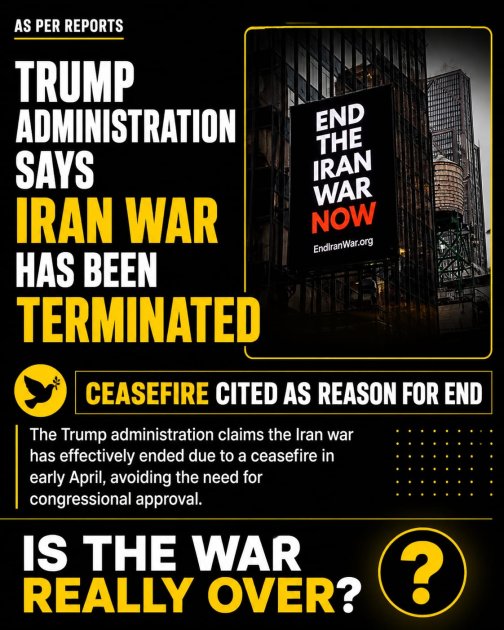
The Trump administration has asserted that the ongoing conflict involving Iran has been effectively “terminated,” citing a ceasefire that began in early April as the primary reason. This interpretation allows the administration to bypass the requirement of seeking congressional approval before the 60-day deadline tied to military engagement.
According to officials, the ceasefire has paused active hostilities to the extent that the conflict can no longer be considered an active war. This position aligns with arguments previously presented by Defence Secretary Pete Hegseth during Senate testimony, where he emphasized that the ceasefire had effectively brought military operations to a halt.
The announcement comes amid growing political and international scrutiny. President Donald Trump, addressing the situation on Thursday, indicated that the United States may reconsider its military presence in allied countries such as Italy and Spain. This follows their opposition to the Iran war, and comes shortly after a similar proposal to reduce troop presence in Germany.
At the same time, reports highlighted that Trump had been facing a critical deadline on April 30 to secure congressional authorization for continued military involvement in Iran. However, by framing the conflict as concluded, the administration appears to have avoided that requirement.
Despite these claims, questions remain regarding the ground reality of the situation. While a ceasefire may have paused direct conflict, it is still unclear whether the war has truly ended or is merely in a temporary state of suspension.
The development has sparked debate among policymakers and analysts, with many questioning whether labeling the conflict as “terminated” reflects the actual situation or serves as a strategic political interpretation.




Comments
No comments yet
Be the first to start the discussion.