 Mr_Rajkamal
 ‘Human-Made’ or ‘AI-Free’? Global Debate Grows Over Labels for Content Created Without Artificial Intelligence
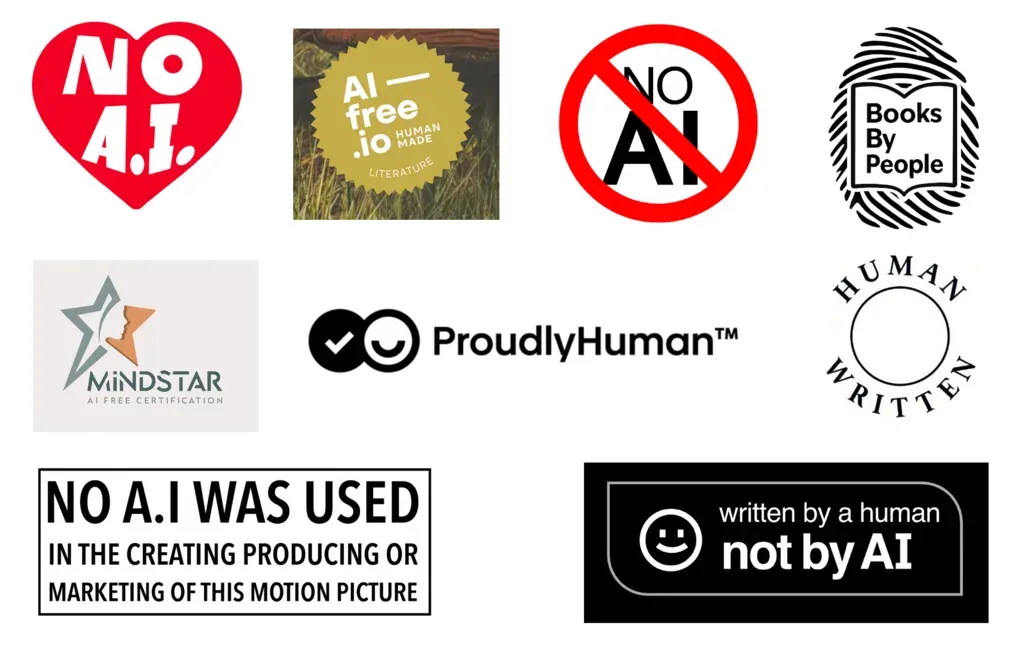
London: As artificial intelligence tools rapidly transform industries, a growing number of companies and creators are introducing labels such as “Human-Made”, “AI-Free”, “No AI” and “Proudly Human” to signal that their work was produced without the help of artificial intelligence.
The movement is gaining attention across sectors including film, marketing, publishing, art and websites, as professionals seek to highlight content created entirely by humans.
The trend reflects rising concerns that AI-powered automation could replace jobs or even entire professions in the creative and digital industries.
Race to Create an AI-Free Certification Logo
Organisations around the world are now attempting to create a globally recognised label that confirms whether a product or piece of content was made without AI.
According to reports, at least eight different initiatives are currently working on certification systems that could act as a trusted symbol for human-created work.
Many supporters want a label similar to the well-known “Fair Trade” logo, which assures consumers that products were ethically produced.
Confusion Over What ‘AI-Free’ Really Means
However, experts warn that the growing number of competing labels may create confusion for consumers.
One major challenge is defining exactly what counts as “AI-free” or “human-made”.
For example, some creators may use AI tools for editing or assistance while still producing the main work themselves.
This raises questions about whether such content should still qualify as human-created.
Experts Call for Global Standards
Consumer experts say the industry urgently needs a single universal definition to ensure transparency and trust.
Dr Amna Khan, a consumer expert at Manchester Metropolitan University, said multiple competing labels could mislead customers.
“AI is creating significant disruption and competing definitions of what is ‘human-made’ are confusing consumers,” she said.
She added that a clear global standard is essential to help buyers understand what they are purchasing.
Growing Demand for Human-Created Content
The push for AI-free labels reflects a wider cultural debate about the role of artificial intelligence in creative industries.
Some artists, writers and filmmakers believe highlighting human craftsmanship could become a powerful selling point in the future.
Supporters argue that just as consumers look for organic or ethically produced goods, they may also start choosing content created entirely by humans.
Future of AI-Free Labels
Whether a universal certification will emerge remains uncertain.
For now, several organisations continue to experiment with different labels and standards, hoping to create a trusted system that consumers around the world can recognise.
As artificial intelligence becomes more integrated into everyday life, the debate over what qualifies as “human-made” is likely to grow even stronger.
FAQs
What does “AI-free” mean?
An AI-free label indicates that a product, artwork or content was created without using artificial intelligence tools.
Why are companies creating “human-made” labels?
Companies and creators want to show that their work was produced by humans rather than AI systems, often to protect creative professions.
Is there a universal AI-free certification?
No. Several organisations are developing labels, but a single global standard has not yet been agreed.
Why are experts concerned about multiple labels?
Experts believe too many competing labels could confuse consumers unless clear definitions and standards are established.