 Mr_Rajkamal
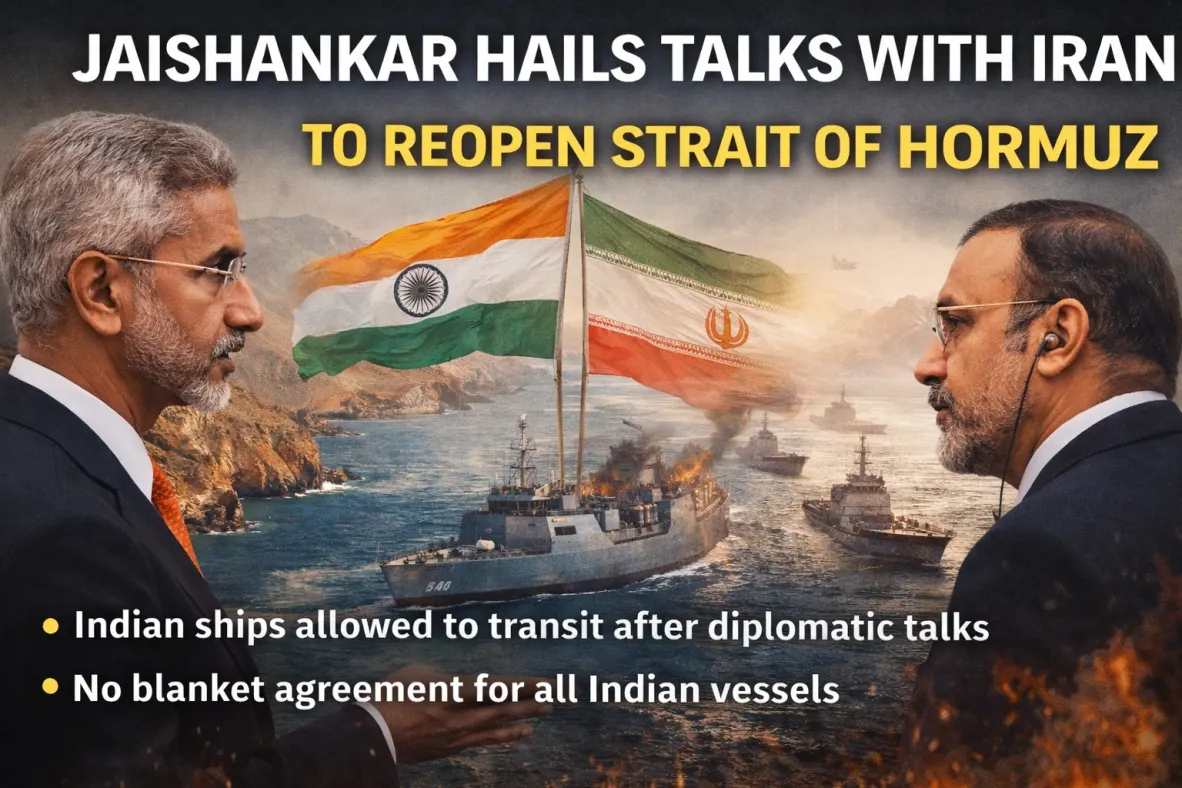
 Jaishankar Hails Talks With Iran to Reopen Strait of Hormuz
India’s External Affairs Minister S. Jaishankar has welcomed diplomatic discussions with Iran aimed at ensuring the reopening of the Strait of Hormuz, one of the world’s most important oil shipping routes. However, he clarified that there is no blanket arrangement guaranteeing safe passage for all Indian-flagged ships through the strait.
The statement comes amid rising tensions in West Asia and fears of disruption to global energy supplies as the conflict involving Iran, the United States, and Israel continues to escalate.
Diplomacy Helps Indian Ships Cross the Strait
According to reports, recent diplomatic engagement between India and Iran has helped some Indian-flagged vessels pass safely through the Strait of Hormuz. Jaishankar said that two Indian LPG carriers were able to transit the route successfully following discussions with Iranian officials.
The minister emphasized that these outcomes demonstrate the effectiveness of direct diplomatic engagement rather than relying solely on military measures.
No Blanket Arrangement for Indian Ships
Despite the successful passage of some vessels, Jaishankar clarified that there is currently no universal agreement guaranteeing safe transit for all Indian ships. Each vessel’s passage depends on specific circumstances and ongoing communication with Iranian authorities.
This clarification comes as speculation circulated that Iran had granted special permissions to Indian vessels amid the ongoing regional crisis.
Why the Strait of Hormuz Matters
The Strait of Hormuz is one of the world’s most critical maritime chokepoints. Nearly 20% of global oil supply passes through this narrow waterway connecting the Persian Gulf with international shipping lanes. Disruption in the strait can have immediate consequences for global energy markets. :contentReference[oaicite:0]{index=0}
The ongoing Iran war has already led to attacks on multiple vessels and a sharp decline in shipping traffic in the region. Oil prices have surged as traders fear prolonged disruptions to global energy supply. :contentReference[oaicite:1]{index=1}
India Focused on Energy Security
India imports a large portion of its crude oil through routes that pass near the Strait of Hormuz. Any prolonged disruption in the region could significantly affect the country’s energy supply and economic stability.
To address these risks, the Indian Navy has increased monitoring operations in the region as part of efforts to safeguard merchant vessels and maintain maritime security.
Global Concerns Over Gulf Shipping
The escalating conflict in the Middle East has raised international concerns about shipping safety and global oil supply chains. Several countries are now exploring diplomatic and security measures to ensure the continued movement of energy shipments through the region.
For India, maintaining diplomatic communication with regional powers remains a key strategy to protect its trade routes and energy security.
Conclusion
Jaishankar’s remarks highlight India’s diplomatic approach to managing the ongoing Middle East crisis. While talks with Iran have helped some Indian vessels navigate the Strait of Hormuz safely, the absence of a blanket agreement means the situation remains fluid.
As tensions continue across the Gulf region, the stability of this crucial shipping route will remain central to global energy markets and international geopolitics.
FAQs
- Why is the Strait of Hormuz important?
Around 20% of the world's oil supply passes through the Strait of Hormuz, making it one of the most critical energy shipping routes. - Did Iran allow Indian ships to pass through the strait?
Some Indian vessels have passed safely after diplomatic talks, but there is no blanket arrangement for all Indian-flagged ships. - Why is India concerned about the Hormuz Strait crisis?
India imports large amounts of crude oil through routes near the Strait of Hormuz, so disruptions could affect its energy security. - How is India protecting its ships in the Gulf region?
The Indian Navy has increased monitoring and escort operations to ensure the safety of merchant vessels.